
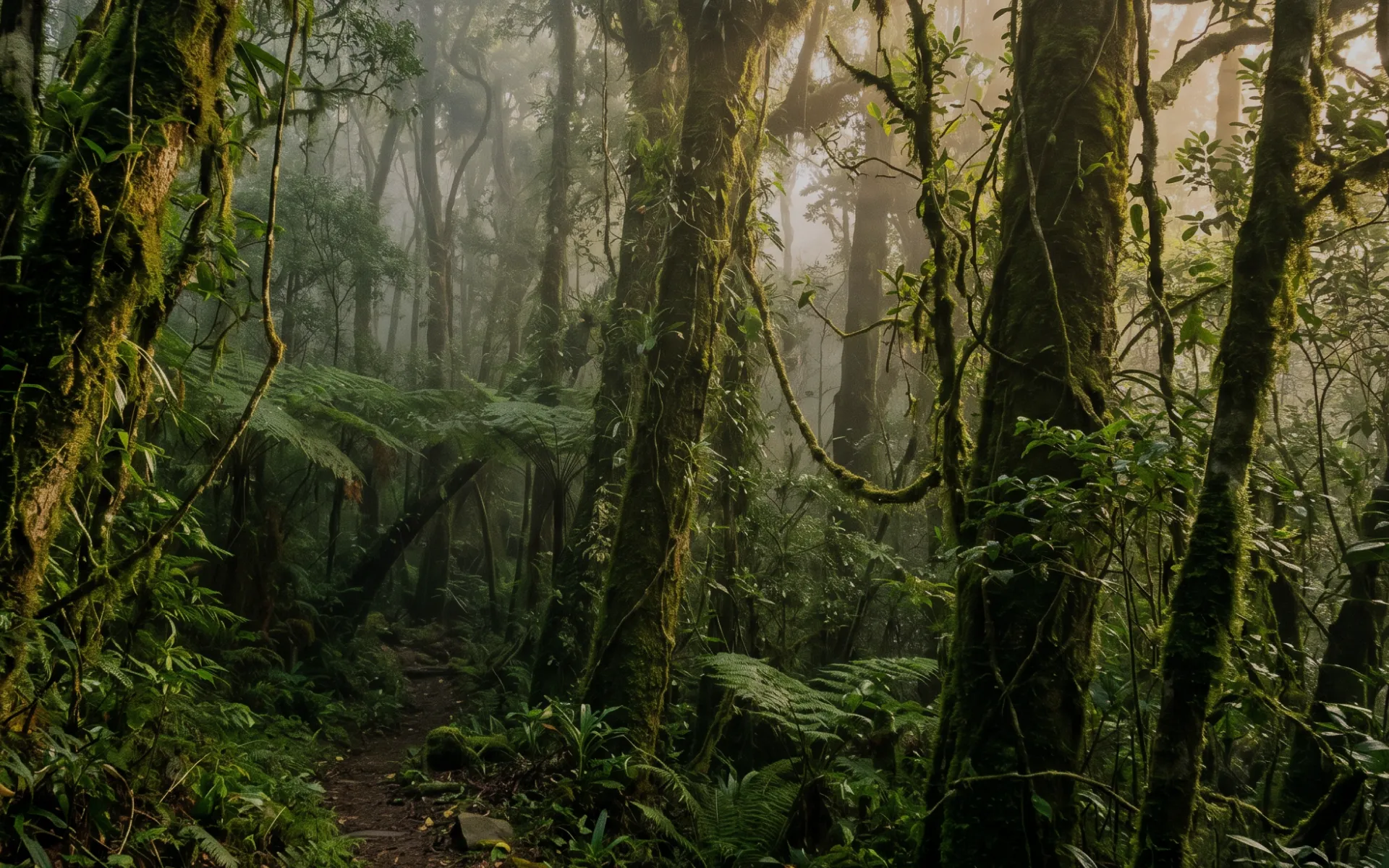
Kuhestan sits on the edge of the Woodbush Forest Reserve, back-to-back with it along a shared fence. Why birders stay here and how to plan your visit.
·
7
min read
If you are planning a birding trip to Magoebaskloof, the question is rarely whether to visit Woodbush. It is where to sleep so that you are already there when the forest wakes up. Kuhestan Organic Farm sits on the edge of the Woodbush Forest Reserve, back-to-back with it along a shared fence, and no other establishment is this close to the reserve.
This guide explains what that position means for a birder, what you can expect to hear and see, which cottage to choose, and how to plan a stay that gives you the best of the forest at first light.
Why the position matters: on the edge of the Woodbush Forest Reserve
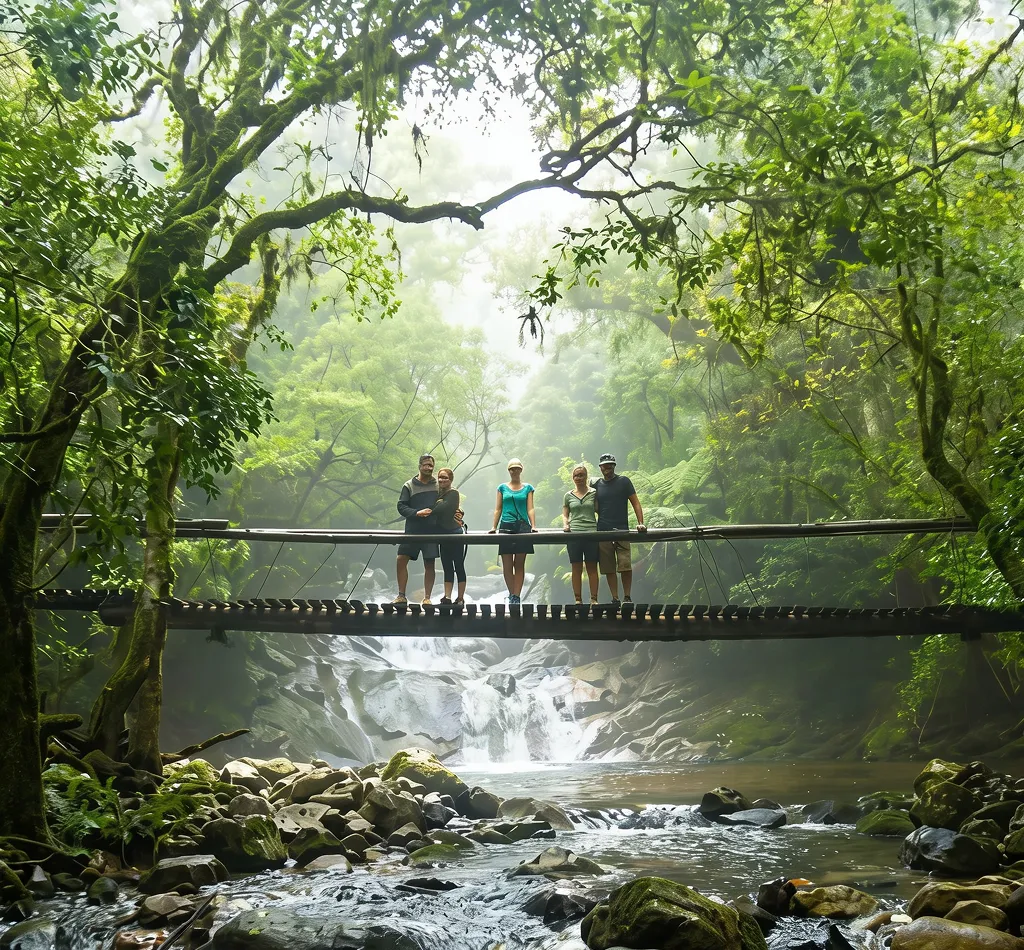
Woodbush is widely described as South Africa’s second-largest indigenous forest, and the Magoebaskloof Tourism Association calls it the largest indigenous forest in Limpopo. It is tall, cool Afromontane forest, and for many South African birders it is one of the most rewarding forest birding areas in the north of the country.
Kuhestan’s boundary runs back-to-back with the reserve along a shared fence. That matters for one simple reason: forest birds are at their most active and most vocal in the first hours after sunrise. When you stay on the forest edge, you are not driving in at dawn. You are already listening from the patio while the kettle boils.
The edge itself is good habitat too. Birds move between the canopy, the forest margin, the garden and the orchard, so a slow walk around the property can be as rewarding as a long drive. Many guests find that their best sightings happen within a few steps of their own front door.
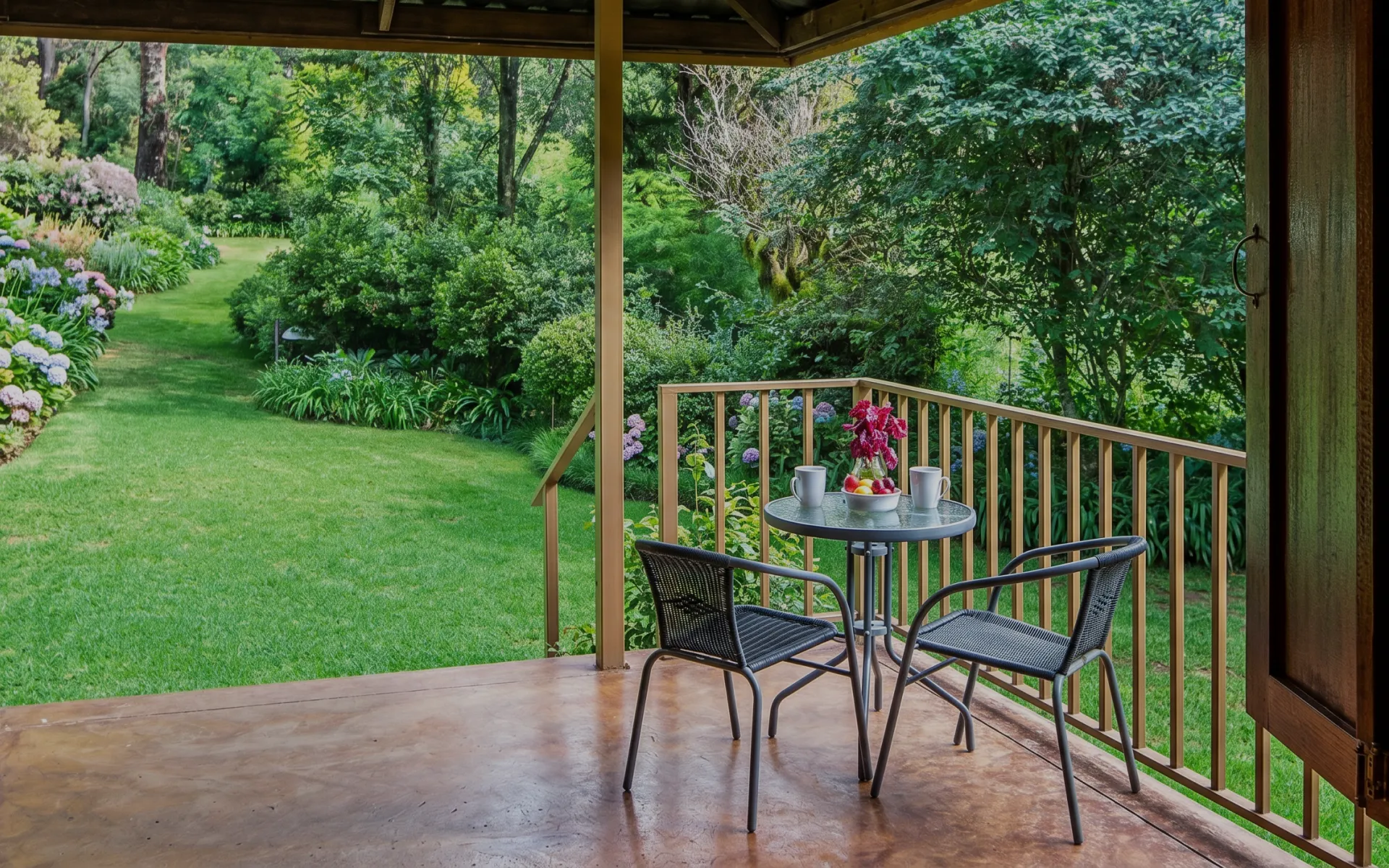
What you can see from the patio at dawn
Forest birding is about patience rather than speed. On a still morning the forest edge is full of calls well before you see anything, and learning a few key calls before you arrive will help a great deal. Species regularly observed at Kuhestan and along the forest edge include:
Cape Parrot, the bird many birders come to Magoebaskloof for
Narina Trogon
Knysna Turaco
Orange Ground Thrush
White-starred Robin
Chorister Robin-Chat
Green Twinspot
Swee Waxbill
Southern Double-collared Sunbird
African Dusky Flycatcher
Emerald Cuckoo
Sightings depend on the season, the weather and a little luck, so nothing is guaranteed. The summer months bring the fullest dawn chorus, when the cuckoos are calling. In winter the forest is quieter, but the resident forest species are still here for those who wait for them.
Before you arrive, download the Kuhestan bird checklist so you can keep track of what you see on the property. If you would like help with the shyer forest species, ask us to arrange a local bird guide for you. A guide who knows the calls can turn a quiet morning into a memorable one.
A simple dawn routine for forest birding
Before sunrise. Make coffee and sit on the patio for the first half hour of light. Listen more than you look, and note where the calls are coming from.
Early morning. Walk slowly along the forest edge and through the garden, where birds come out to feed in the first sun. Stand still in one spot for several minutes rather than covering ground quickly.
Mid-morning. Head into the forest on foot or take the Woodbush Forest Drive while activity is still good, then come back for a late breakfast.
Late afternoon. Activity picks up again as the day cools. A final walk to the forest edge before dark is a quiet, lovely way to end the day.
Wherever you go, bird considerately: keep noise down, stay on marked paths, go easy on call playback for sensitive forest species and leave gates as you find them.
Which cottage suits a birder
Every cottage at Kuhestan is a short walk from the forest edge, but some give you more forest from the chair. If dawn birding is the point of your trip, this is how we would choose.
Twin Studio 3 and Queen Studio 4. These two have the best outlook to the forest edge from their patios. You can sit outside with your binoculars and a coffee as the light comes up, and let the birds come to you. See Twin Studio 3 and Queen Studio 4.
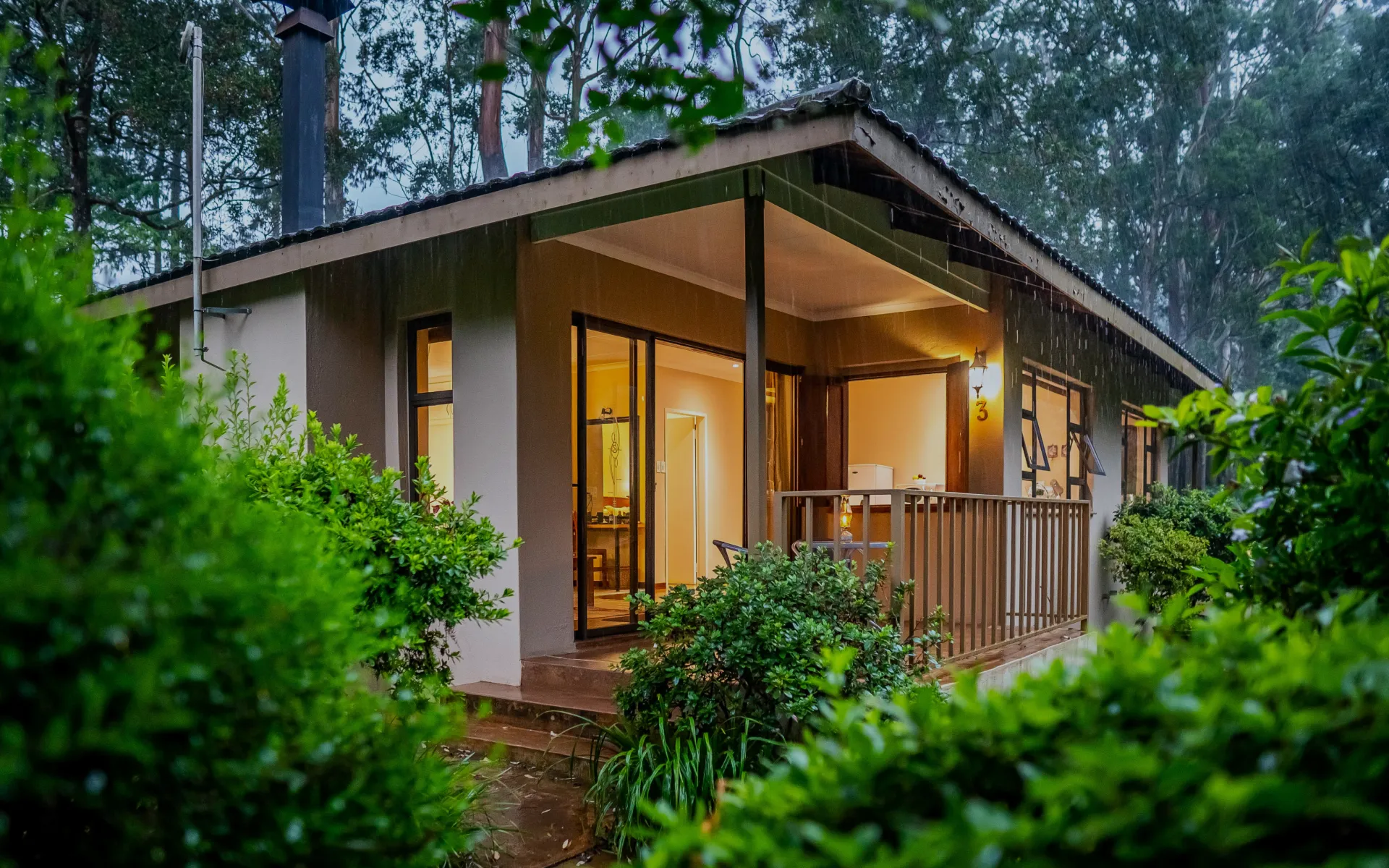
Studios 1 and 2. Both face the forest but are set slightly further back. They suit birders who want a quiet, comfortable base close to the trees and are happy to take a short stroll to the edge each morning.
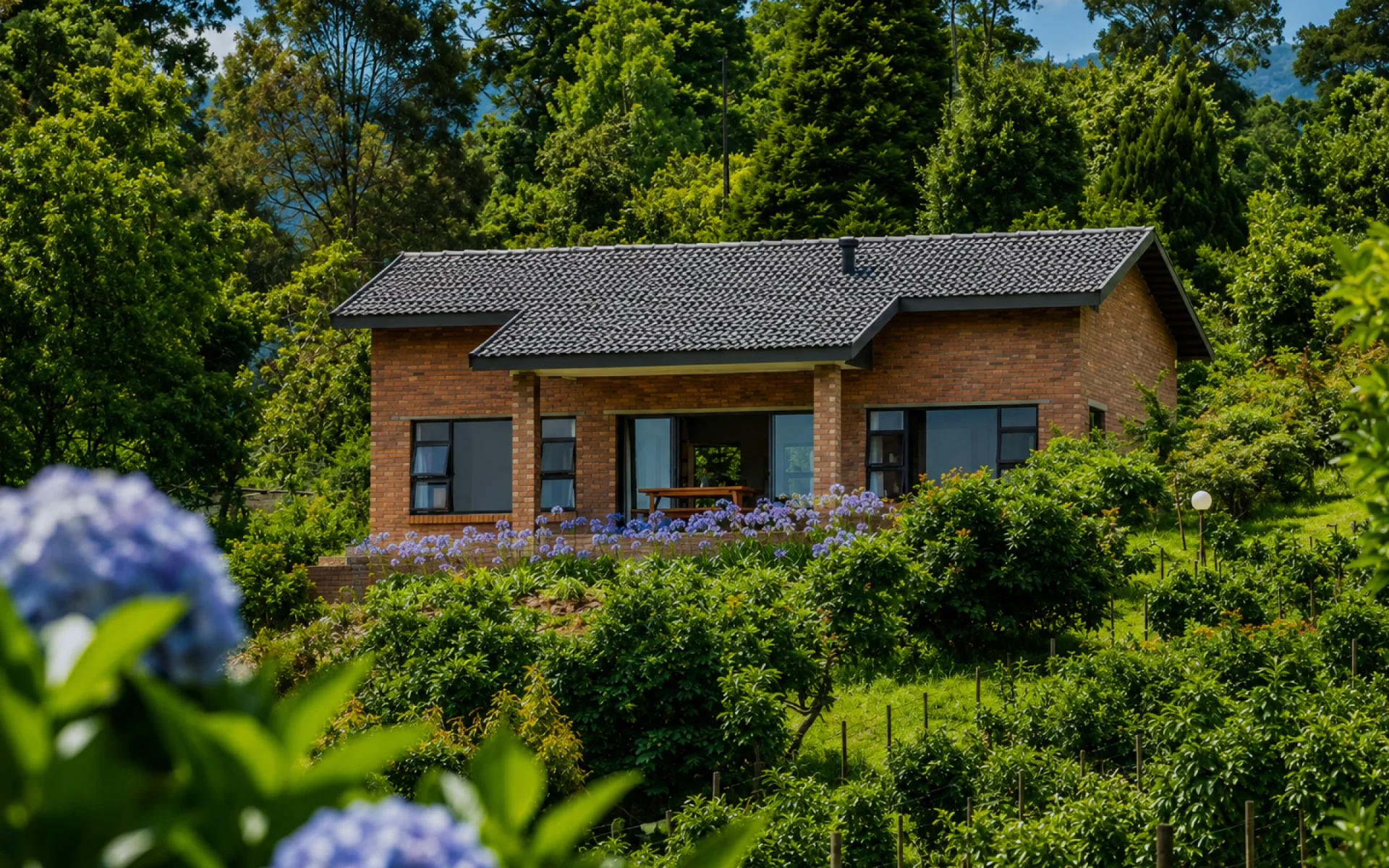
The Two-Bedroom Cottage. This cottage sits in the orchard and has an east-facing terrace that catches the early sun. It is a lovely spot for early-morning birding over the orchard and garden, and works well for two couples or a group of friends travelling together. See the Two-Bedroom Cottage.
Walking from Kuhestan to the Magoebaskloof Hiking Trail
You do not need the car to get into the forest. The Magoebaskloof Hiking Trail is about 600 metres from Kuhestan, so you can walk from your cottage and be under the canopy within minutes. Walk slowly, stop often and listen; many forest birds give themselves away by call long before you see them.
Along the way, look out for the Big Tree, a eucalyptus planted in the early 1900s that takes six to eight people holding hands to encircle, with the three Matriarchs standing nearby. They are not forest birds, but they are a fine excuse to pause and scan the branches.
For a longer outing, the Woodbush Forest Drive runs for about 14 km through the forest. Go early, drive slowly, pull over safely and switch off the engine when you hear activity. Reserve access and road conditions can change, so check locally before you set out.
Fireplaces, no televisions and a quiet forest evening
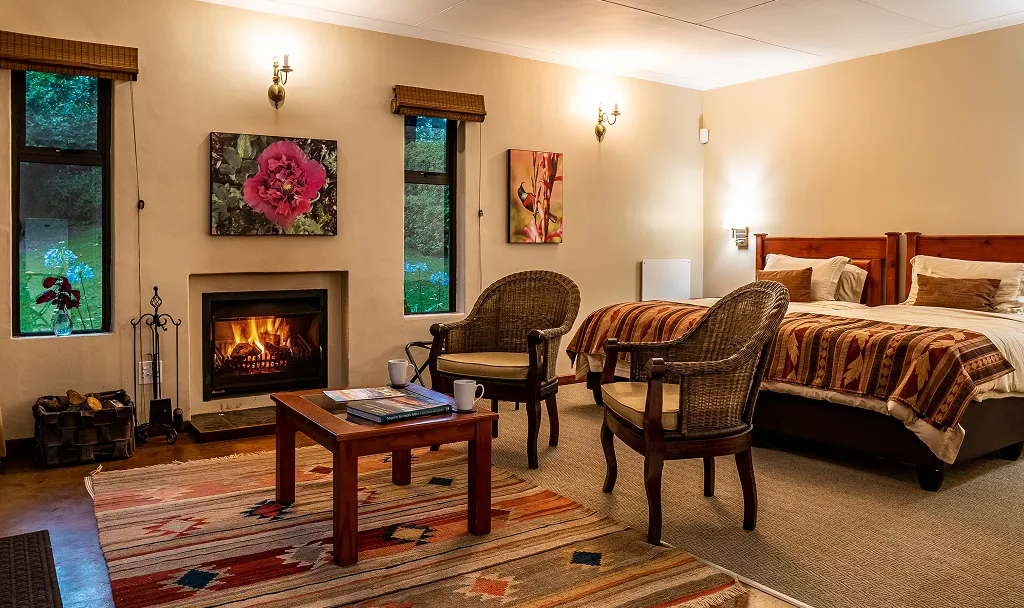
Birding days start early, so evenings at Kuhestan are kept simple. The cottages are self-catering, with wood-burning fireplaces and no televisions, and there is daily service so you can spend your time outdoors rather than tidying up.
After a long morning in the forest and a slow afternoon in the garden, light the fire, cook something simple and write up the day’s list. It is the kind of quiet that makes the next early start feel easy.
Planning your stay and booking direct
Getting here. Kuhestan is about four hours’ drive from Johannesburg and 30 minutes from Tzaneen. You will find us at J22 Houtbosdorp Road, off the R71 in Magoebaskloof.
Check-in and check-out. Check-in is from 14:00 and check-out is by 10:00. If you arrive in the afternoon, take a short walk to the forest edge before dark, then save the serious birding for the next morning.
How long to stay. Two or three nights give you more than one dawn, which helps with changeable mountain weather and gives you a second chance at the species you missed.
What to pack. Binoculars, a field guide or birding app, warm layers for early mornings, a rain jacket and comfortable shoes for forest paths.
Book direct. You can check availability and book your stay on our booking page. To learn more before you go, read about birding at Kuhestan, browse all of our cottages or see our luxury cottages in Magoebaskloof.
Wherever you spend your days in the forest, there is something special about coming home to a cottage on the edge of the reserve, with the trees just beyond the fence and the next dawn chorus only a night away.
Where is the best place to stay for Woodbush Forest birding?
Kuhestan Organic Farm in Magoebaskloof sits on the edge of the Woodbush Forest Reserve, back-to-back with it along a shared fence, and no other establishment is this close. You can start birding from your patio at first light. Twin Studio 3 and Queen Studio 4 have the best forest outlook.
Can you walk from Kuhestan to the Woodbush Forest?
Yes. Kuhestan borders the reserve, and the Magoebaskloof Hiking Trail is about 600 metres away, so you can leave the car parked and walk into the forest. For a longer outing, the Woodbush Forest Drive runs for about 14 km through the forest.
Which birds are regularly seen at Kuhestan?
Species regularly observed at Kuhestan and along the forest edge include Cape Parrot, Narina Trogon, Knysna Turaco, Orange Ground Thrush, White-starred Robin, Chorister Robin-Chat, Green Twinspot, Swee Waxbill, Southern Double-collared Sunbird, African Dusky Flycatcher and Emerald Cuckoo. Sightings vary with season and weather.
Is there a bird checklist for guests?
Yes. Kuhestan has a downloadable bird checklist for the property, linked on our birding page and in this article. If you would like help finding the shyer forest species, we can arrange a local bird guide for you.
Self-catering cottages on the edge of the Woodbush Forest Reserve, back-to-back with it along a shared fence. Check availability and book direct.
Stay in Touch
Seasonal notes from the garden and the farm. Unsubscribe anytime.
Visit
Kuhestan Organic Farm
J22 Houtbosdorp Road
Magoebaskloof, Limpopo 0731
South Africa
Hours
Garden visits
09:00 – 12:00
Farm Shop
09:00 – 12:00
Check-in
from 14:00
Check-out
by 10:00
© 2026 Kuhestan Organic Farm.